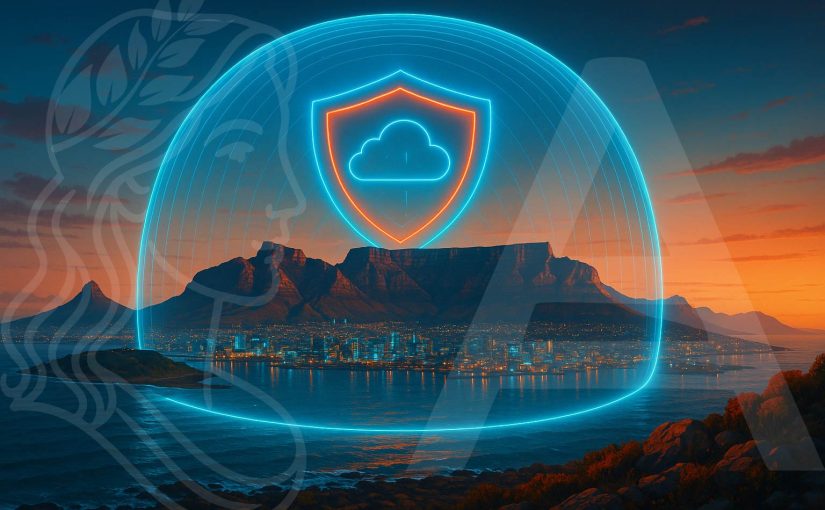
Layered Cybersecurity for Resilient Data Protection

Why backup and security work best together

When it comes to cybersecurity, there is no single tool that can stop every threat.

Modern attacks don’t arrive neatly at one point in the network; they exploit people, credentials, cloud platforms, email systems, and data itself. Relying on a single line of defence is no longer realistic.

Think about physical security. You wouldn’t protect your home with just a lock on the door. You combine alarms, CCTV, access control, lighting, and armed response.

Cybersecurity works the same way. True resilience comes from layered protection, where each control plays a specific role and supports the others.

This is why layered cybersecurity has become the foundation of resilient data protection for organisations of all sizes.

Cybersecurity works best when it’s designed in layers

Layered security, often called defence in depth, moves beyond perimeter protection and focuses on safeguarding your environment across endpoints, identities, email, networks, applications, and cloud platforms.

Each layer has its purpose:

  • Preventing threats before they reach users or systems
  • Detecting suspicious behaviour when something slips through
  • Responding and recovering quickly to limit operational, financial, and reputational damage

On its own, any single control can be bypassed. Together, layered controls create resilience.

Put simply: if one layer fails, others remain in place to contain the threat and keep the business running.

For decision-makers, this means fewer single points of failure and a security posture that reflects how real-world attacks actually unfold—gradually, opportunistically, and often invisibly until damage is done.

Why backup and cybersecurity must work together

One of the most common misconceptions in cloud environments is that security alone is enough. Many organisations assume that because they use Microsoft 365, their data is automatically protected and recoverable.

Microsoft 365 provides powerful productivity and security features—but it is not a backup solution.

If data is deleted, corrupted, encrypted by ransomware, or altered by a compromised account, recovery options can be limited. This is where cybersecurity and backup must work together, not as separate tools, but as a single, integrated strategy.

The Acronis Ultimate Microsoft 365 Protection bundle, delivered locally by Soteria Cloud, brings these layers together in one solution, providing prevention, detection, and recovery in a single, cohesive platform.

A practical example: layered protection in action

Consider a professional services firm operating under the belief that its Microsoft 365 environment is fully protected.

One morning, an employee receives a convincing phishing email and unknowingly enters their credentials. The first line of defence has been breached.

From here, layered protection makes the difference:

  • Multi-factor authentication prevents the attacker from logging in with stolen credentials alone.
  • Advanced email security, managed by Soteria Cloud, identifies the phishing campaign and automatically removes similar messages across the organisation.
  • If a mailbox is still compromised, conditional access controls restrict what the account can do and where it can connect from.
  • Unusual activity is flagged and surfaced in a unified security dashboard, enabling rapid investigation.
  • Most critically, immutable cloud backups ensure that if data is deleted, altered, or encrypted, it can be restored quickly and cleanly, without paying a ransom.

When one control fails, the remaining layers contain the threat. Business operations continue. There is Zero Downtime and data integrity is preserved.

This is the difference between reacting to a breach and being prepared for one.

Real-time visibility through a single dashboard

Even the strongest security tools lose value if they are difficult to manage or interpret.

Soteria Cloud brings multiple security and backup capabilities together in a single, unified dashboard, giving organisations clear visibility across their Microsoft 365 environment.

Instead of juggling disconnected platforms and fragmented alerts, teams gain:

  • A consolidated view of risks and incidents
  • Real-time insight into suspicious activity
  • Faster prioritisation and response
  • Clear, business-relevant reporting

Importantly, this visibility extends beyond IT teams. Security insights can be translated into meaningful reporting for leadership, supporting governance, compliance, and informed decision-making. All without the noise or complexity that often surrounds cybersecurity.

The local support advantage

It’s crucial to remember that technology alone does not create confidence. People do.

As a locally based provider, Soteria Cloud delivers more than software. Clients gain access to responsive, accountable specialists who understand regional business realities, regulatory requirements, and operating environments.

This local presence means:

  • Faster response times
  • Clearer communication
  • Ongoing guidance, not just incident response

Rather than dealing with an overseas helpdesk, organisations work with a partner invested in long-term resilience, adapting security strategies as threats, technologies, and business needs evolve.

Take the next step towards resilient data protection

Cyber risk is not static, and your security strategy shouldn’t be either. Whether you are reassessing existing controls or building capability for the first time, a structured conversation can uncover gaps you may not realise exist.

Soteria Cloud offers practical security assessments that go beyond generic scores, delivering actionable recommendations aligned to your organisation’s size, sector, and risk profile.

Zero downtime. Zero data loss. Acronis powered. Soteria enabled.

Comprehensive, layered data protection starts now.

The Cost of Downtime | Managing Multiple Risks

The True Cost of Downtime: Why Every Minute Matters After a Cyberattack

For businesses of all sizes, downtime isn’t just an IT inconvenience, it’s a significant operational and financial risk with real, measurable consequences.

In today’s digital economy, where organisations depend on continuous connectivity and data availability, even brief outages can lead to lost revenue, regulatory exposure and long-term reputational harm. And when downtime follows a cyberattack, the impacts multiply.

Here’s a clear look at the true cost of downtime after a cyber incident and how businesses can better mitigate, manage and recover from these risks.

Downtime: Not a Matter of “If,” But “When”

Recent high-profile incidents underscore how pervasive and damaging ransomware and related cyberattacks have become for South African organisations.

In 2025, the South African Weather Service (SAWS) suffered a ransomware attack that shut down critical IT systems for more than two weeks, leaving web access and vital forecasting services offline; Services relied upon by aviation, agriculture and emergency operations.

This prolonged downtime illustrates how deeply a cyber compromise can paralyse core business functions and cause knock-on effects for other businesses and industries far beyond the limits of a company’s internal operations. 

Similarly, Astral Foods, one of the country’s largest poultry producers, was forced to halt processing and deliveries after a cyberattack, with the resulting operational disruption expected to cut profits by around R20 million in a single quarter.

These cases highlight how a cyber compromise can paralyse core business functions and ripple outward to affect entire supply chains.

More recently, the South African National Credit Regulator (NCR) — the government agency responsible for overseeing credit providers, debt counsellors and consumer protection — saw its systems disrupted by a ransomware attack, with threat actors claiming to have stolen and published over 42 GB of sensitive internal data on the dark web.

This incident shows that downtime isn’t merely about systems being offline, it’s about critical services grinding to a halt, stakeholders being cut off, and trust eroding when institutions responsible for financial oversight are compromised.

Counting the Real Costs of Downtime

When cybercriminals hit your systems, the immediate impact is operational: revenue streams dry up, workflows stall, and employees are left idle or resort to time-intensive manual alternatives.

But the full cost of downtime goes far deeper:

1. Lost Revenue and Productivity

Every hour offline halts sales, disrupts supply chains and prevents employees from performing productive work. That translates directly to revenue loss; and the longer the outage, the steeper the cost.

2. Reputational Damage

Customers and partners expect reliability. Downtime, particularly when linked to a data breach or cyberattack, undermines confidence in your ability to protect services and information. Damage to reputation can have long-term revenue implications far beyond the attack itself.

3. Legal and Regulatory Exposure

Unplanned downtime after a cyberattack can trigger legal obligations and penalties. In South Africa, organisations are required to comply with POPIA and other regulatory frameworks that mandate protection of personal information and timely breach reporting. Failure to do so can result in fines, litigation and extended compliance reviews.

4. Recovery Costs and Distraction

Even once systems come back online, recovery consumes valuable time, money and executive focus. Internal teams and external consultants are diverted from strategic projects just to stabilise IT environments and ensure data integrity.

Industry data shows that the median ransomware recovery cost for South African companies now sits around R24 million, with many incidents involving days or weeks of downtime. These figures underscore the severe financial impact that cyber incidents have on local businesses.

The Myth of Backups as a Safety Net

For many organisations, backups are seen as a last line of defence. But in the face of modern ransomware tactics, backups alone aren’t enough.

Ransomware actors now routinely target backup systems, encrypting or deleting copies to make recovery harder and increase pressure to pay ransom. If backups are outdated, compromised or improperly secured, what should have been a short disruption can quickly become a protracted crisis.

This reality highlights two key points:

  • Backups must be secure, isolated and tested regularly.
  • Recovery procedures must be rehearsed across the organisation to ensure they function under pressure.

Turning Downtime Risk into Resilience

Boards and executives are increasingly recognising that cyber readiness must be treated as core operational risk management, not just an IT issue.

To protect your organisation from costly downtime:

  • Validate backup integrity and ensure systems are resilient to attack.
  • Regularly test recovery plans under realistic scenarios.
  • Build incident response playbooks that define clear roles and communication paths.
  • Engage with cybersecurity specialists before — not after — an attack.

In a landscape where cyberattacks are almost inevitable, preparation is what separates organisations that bounce back quickly from those that struggle for months.

Downtime is a Business Risk. We’ve Got You Covered

The financial and operational costs of downtime after a cyberattack are real, and rising. But with the right strategy, your business can minimise exposure, accelerate recovery and maintain trust with customers and partners.

Don’t wait to find out whether your backups are reliable or your cyber readiness is adequate. Check your ransomware preparedness now and ensure that downtime doesn’t become a business-critical crisis.

Our team is on hand to advise you on the optimal cybersecurity strategy to protect your organisation today. Make sure your downtime doesn’t become a business-critical crisis.

Secure your future today with Soteria Cloud’s suite of Acronis-powered solutions, delivered locally by Soteria.


Privacy Misconceptions & Myths

AI Tools and Apps: Privacy Misconceptions & Data Security Myths Busted

Artificial intelligence tools have rapidly embedded themselves into modern business and everyday life. From AI-powered chatbots and content tools to automation inside productivity platforms, the promise of faster workflows, automation, and productivity gains is so attractive that many organisations adopt AI tools without fully considering the data security implications.

But, as AI adoption accelerates, so do misconceptions around privacy and data security. Many users assume AI tools are inherently safe, private, and self-securing. In reality, AI introduces new and growing data risks, especially when organisations don’t fully understand how information is processed, stored, shared, or retained.

Limiting AI use is no longer realistic. Instead, businesses must learn how to use AI responsibly while protecting their data, systems, and compliance obligations. We unpack four of the most common myths surrounding AI and why they present real security threats when left unchecked.

Myth 1: AI interactions are private and confidential

Many users treat AI chatbots like personal assistants – and some even as trusted advisors, sharing sensitive business information, customer details, internal strategies, or personal data under the assumption that conversations are private.

Reality:
AI interactions are rarely protected in the same way as communications with professionals such as lawyers or doctors. Depending on the platform, conversations may be logged, reviewed, retained for training purposes, or subject to legal discovery and subpoenas.

This means sensitive data entered into AI tools could potentially be exposed, intentionally or unintentionally. Without clear governance policies, businesses risk leaking confidential information simply through everyday AI use.

Myth 2: Popular AI apps automatically keep your data secure

There’s a widespread belief that if an AI tool is well-known or enterprise-grade, security and privacy are handled by default. However, several high-profile incidents have shown how features designed for collaboration or discovery can accidentally expose private data.

Reality:
Many users don’t fully understand where their AI-generated data is stored, how long it’s retained, or who can access it. Some platforms include public or semi-public sharing features that can expose conversations or uploaded content if misconfigured.

For businesses, this lack of visibility creates serious compliance and reputational risks, especially when customer or proprietary data is involved. Regulators have repeatedly warned that poor understanding of digital tools is contributing to the rise in reported data breaches.

Myth 3: AI systems are secure and don’t require extra cybersecurity measures

AI often feels abstract or “virtual,” leading to the assumption that it doesn’t need the same level of security attention as traditional IT systems.

Reality:
AI tools are part of your broader digital ecosystem, and that makes them a potential attack surface. Cybercriminals are increasingly using AI to enhance phishing, automate malware, and exploit cloud-based platforms.

Relying solely on basic antivirus protection or vendor privacy policies is no longer enough. Organisations need layered cybersecurity strategies that account for AI-driven workflows, cloud platforms, and human error.

At a minimum, this includes:

  • Clear policies on what data can be shared with AI tools
  • Staff training on AI-related risks
  • Strong endpoint and cloud security controls
  • Reliable backup and recovery solutions

Myth 4: Data stored in Microsoft 365 is fully backed up by default

Microsoft 365 is central to modern work, and many organisations assume that because their data lives in the cloud, it’s fully protected.

Reality:
While Microsoft provides availability, retention, and versioning features, these are not true backups. They are not designed to protect against:

  • Accidental or malicious deletions
  • Long-dwell ransomware attacks
  • Insider threats
  • Compliance-driven recovery needs

If data is corrupted, encrypted, or permanently deleted beyond retention limits, recovery may not be possible without an independent backup.

In an AI-enabled workplace, where data is constantly created, edited, shared, and automated, this risk is amplified.

Why Secure Backup Matters in the AI Era

AI is not inherently dangerous – but misunderstood AI is.

As data volumes grow and automation accelerates, organisations must assume that mistakes, breaches, or attacks will happen. The question is whether your business can recover quickly and completely.

This is where secure, independent online backup and Microsoft 365 protection become essential.

Acronis Ultimate Microsoft 365 Protection – delivered locally by Soteria Cloud, ensures your business-critical data is:

  • Protected beyond native cloud retention
  • Recoverable to a specific point in time
  • Safeguarded against ransomware and accidental loss
  • Aligned with compliance and governance requirements

AI may drive innovation—but resilience is what protects it.

Secure your business professionally with Soteria Cloud – your dedicated data resilience partner.

Why You Need An MSP – Cyber Attack Risk

Cybersecurity in 2026: Why Your Business Needs a Managed Service Provider

Cybercrime has become one of the most significant operational risks for South African businesses, and the danger level rises every year in January. 

After the festive shutdown, unpatched systems, expired credentials, distracted staff, and delayed security updates can all raise the risk of an online crime event.  

As expected, cybercriminals exploit this annual reset period with spikes in phishing, ransomware, business email compromise (BEC), and credential-harvesting attacks.

January attacks are particularly damaging because they target finance teams finalising year-end reporting, HR departments onboarding new staff, and executives catching up on emails. 

Here’s why a managed service provider can help protect your business from fraud, data breaches, or prolonged system outages. 

The Unique Cyber Threat Facing South Africa in 2026

As we deep dive into 2026, local businesses face an increasingly challenging cyber threat landscape. 

The country continues to be a high-value target due to its advanced banking infrastructure, widespread cloud adoption, and increasing digital transformation among small and medium enterprises.

  • AI-powered phishing, deepfake voice fraud, and automated ransomware campaigns are becoming more prevalent, often tailored specifically to local brands, banks, and payment systems. 
  • Infrastructure instability also creates security gaps, as businesses rely more heavily on remote access, unmanaged networks, and third-party vendors, all of which expand the attack surface.

In addition, compliance pressure from POPIA and growing customer expectations around data privacy mean that a cyber incident is no longer just an IT issue, but a reputational and legal risk with serious financial consequences. 

Why Partnering with a Managed Service Provider Makes Business Sense

This significant threat environment is why many South African organisations are partnering with Managed Service Providers (MSPs) to strengthen their cybersecurity posture.

An MSP delivers proactive, 24/7 monitoring, ensuring threats are detected and neutralised before they escalate. 

Rather than relying on limited in-house resources, businesses gain access to experienced cybersecurity professionals, enterprise-grade tools, and proven incident response processes.

An MSP offers these key benefits:

  • Improved Security: Continuous monitoring, endpoint protection, patch management, and threat detection reduce exposure to ransomware and phishing attacks.
  • Predictable Costs: Fixed monthly pricing replaces unpredictable IT and recovery expenses.
  • Regulatory Support: MSPs assist with POPIA compliance, audits, and data protection best practices.
  • Business Focus: Internal teams can focus on growth and operations, rather than firefighting IT issues. 

Building Cyber Resilience for the Year Ahead

In 2026, cybercrime will continue to grow in scale and sophistication, especially in January when businesses are most vulnerable. Partnering with a trusted Managed Service Provider is a strategic investment in resilience, continuity, and long-term success.

Our team of data security experts is ready and waiting to assist your business with a comprehensive threat assessment and recommend the ideal cybersecurity package to suit your needs. 

Acronis Ultimate 365 – Microsoft Protection

Why your business needs Microsoft 365 protection

Microsoft 365 is hugely popular in the business community, offering a powerful, cloud-based productivity suite used by millions of organisations worldwide — yet a common and potentially costly misconception is that Microsoft 365 automatically backs up all data and provides complete protection by default. Put simply, Microsoft 365 is not backup.

In reality, this over-reliance on Microsoft’s native settings can leave critical gaps in your security posture, and the platform is not immune to cyber risks.

In 2025 and beyond, we expect those risks to only grow more dangerous.

At first glance, Microsoft 365 appears to deliver strong built-in security, with features such as multi-factor authentication (MFA), anti-phishing, anti-malware, encryption, access management, and endpoint protections included as standard. However, these tools focus primarily on platform security and availability – not full data backup, long-term retention, or rapid recovery from cyber incidents.

Many businesses consider this baseline good enough, but in reality, these native controls form only the foundation of security — not a comprehensive online shield against ransomware, accidental deletion, insider threats, or data loss.

Here’s the low down on Microsoft 365 security and why your business needs more protection.

Why is extra protection for Microsoft 365 important? 

One major reason why businesses need to add extra security layers to their Microsoft 365 suites is the rise of sophisticated threats. 

According to a recent industry overview by Microsoft itself, over half of cyber-incidents investigated by the cloud’s vendor last year were driven by extortion or ransomware.

  •  Attackers increasingly exploit compromised credentials, weak authentication, or misconfigurations to gain admin-level access even when tools like MFA are available. 
  • Once inside, attackers can leverage cloud-native access, shared collaboration tools and storage (like email, file sharing, and collaboration platforms) to move laterally, exfiltrate or encrypt data, and even lock out legitimate users. 

Although Microsoft 365 includes features like versioning and recycle-bin recovery, these are often inadequate for large-scale ransomware or insider-driven destruction and may not provide all the features that allow enterprises to recover fully from a cyberattack. 

User behaviour remains a persistent weak spot 

Recent news reports reveal that over 80% of Microsoft users have had their emails compromised. This could be the entry point for cybercriminals to access your network and do severe financial and reputational damage to your business.

No matter how much built in security a software package offers, the risk of human error is always present – especially when cybercriminals prey on it. 

Phishing emails, unsafe third-party app integrations, forgotten or stale user accounts, and misconfigured permissions can all leave doors wide open. 

  • Many organisations mistakenly assume that all data stored in the cloud is safe while overlooking the shared-responsibility model:
  • While Microsoft secures the infrastructure, you are responsible for properly configuring, managing, and backing up data.
  • In an age where ransomware and data-theft attacks are growing in sophistication and volume, relying solely on default protections is increasingly risky. 

For true resilience, organisations need immutable, air-gapped backup, granular recovery, enhanced monitoring, and incident detection beyond Microsoft’s standard toolkit.

The case for Acronis Ultimate Microsoft 365 protection delivered by Soteria Cloud

While Microsoft 365 delivers a solid baseline of security, modern threats like human error, misconfiguration, phishing, ransomware and insider risks are evolving rapidly. Without additional layers of protection, backup, and proactive governance, businesses remain vulnerable.

For organisations that treat data loss or disruption as unacceptable, and that should be every South African business subject to the POPI Act, investing in supplementary cybersecurity measures is no longer optional. 

To raise your Microsoft 365 security to the highest level, look no further than the Acronis Ultimate M365 Protection package – delivered locally by Soteria cloud. You’ll have access to the best productivity tools matched with the best cyber defences including email backup and encrypted cloud syncing, all powered by Acronis. 

Cybersecurity Strategies

8 Strategies for a Cyber-Secure Future

As organisations prepare for 2026, cybersecurity strategy is shifting from prevention alone to full operational resilience. The objective of this new approach is to maintain business continuity even when cyber incidents occur. 

In practical terms, that means building security and data protection programs around one outcome: Zero downtime. Zero data loss.

We reviewed the latest cybersecurity research to develop eight strategies that form a practical framework for securing your critical data in the year ahead.

1. Keep Systems and Software Fully Updated

  • Regular patching and system updates reduce exposure to known vulnerabilities that attackers routinely exploit. 
  • Automated patch management ensures critical fixes are applied consistently across cloud and on-premises environments.

2. Enforce Zero Trust Access Controls

  • A Zero Trust model ensures no user or device is taken for granted from a security perspective. 
  • Least-privilege access, strong identity governance, and multi-factor authentication help prevent unauthorised access to sensitive data.

3. Formalise Incident Response and Recovery Plans

  • Documented response and disaster recovery plans enable teams to act quickly under pressure. 
  • Clear roles, escalation paths, and recovery procedures reduce confusion and shorten recovery timelines.

4. Maintain Secure, Tested Offline Backups

  • Backups should be isolated from production environments and tested regularly. 
  • Offline or immutable backups provide a reliable recovery point when ransomware or system failure occurs.

5. Monitor Continuously and Detect Early

  • Proactive monitoring and threat detection reduce attacker dwell time. 
  • Early detection limits the scope of damage and accelerates containment and recovery.

6. Train Employees to Reduce Human Risk

  • Phishing and social engineering remain the leading cyberattack vectors worldwide. 
  • Ongoing employee training strengthens awareness and reinforces secure behaviour across the organisation.

7. Assess and Manage Third-Party Risk

  • Vendors and partners often have access to critical systems, and if their security is below par they could compromise yours. 
  • Regular security assessments ensure third-party controls align with organisational risk standards.

8. Segment Networks and Harden Infrastructure

  • Network segmentation and secure configuration limit lateral movement during an attack. 
  • Combined with strong hardware and endpoint controls, this reduces overall attack impact.

Together, these strategies support a cybersecurity posture built for resilience. 

Organisations that align their cloud security and data protection investments for zero downtime and zero data loss are better positioned to withstand disruption and maintain operational stability into 2026.

Ensure holistic data security with Soteria

Cyber resilience isn’t achieved through isolated tools or reactive measures alone. It requires a coordinated strategy, continuous oversight, and the right technology partners. 

That’s where our Total Data Protection package comes in: Acronis powered. Soteria enabled. Ready to shield your digital assets. 

By working with a trusted cybersecurity provider, your company can implement these strategies effectively and ensure that critical business data remains protected, recoverable, and available at all times. 

Now is the time to think ahead, plan ahead, and secure your files for 2026 and beyond. Partner with us for reliability and peace of mind in the year to come. 

EDR – Endpoint Detection and Response


Endpoint Detection and Response: A Critical Layer in Modern Cyber Resilience

As ransomware attacks continue to evolve in scale and sophistication, traditional perimeter-based security is no longer enough. 

Today’s threats increasingly target endpoints such as laptops, desktops, servers, and virtual machines, often bypassing legacy antivirus tools entirely. 

This is where Endpoint Detection and Response, or EDR, has become a critical component of modern cybersecurity strategies.

What Is EDR?

Endpoint Detection and Response (EDR) is a security approach that provides continuous monitoring, detection, investigation, and response across endpoint devices. 

Unlike traditional antivirus solutions that rely primarily on known signatures, EDR focuses on behavioural analysis and real-time threat intelligence to identify suspicious activity as it happens.

  • EDR platforms collect and analyse endpoint data continuously, allowing security teams to detect threats early, investigate incidents in detail, and respond quickly to contain or neutralise attacks. 
  • This includes isolating infected devices, stopping malicious processes, and supporting recovery before business operations are impacted.

What a Good EDR Solution Should Provide

A strong EDR solution should go well beyond basic detection to deliver a comprehensive, modern endpoint defence. At a minimum, it should provide:

  • Continuous monitoring and behavioural analysis of endpoint activity to detect anomalies in real time.
  • Automated response actions including isolating compromised devices, ending malicious processes, or quarantining files.
  • Threat investigation tools that help security teams understand attack vectors and scope.
  • Forensic data capture to support root-cause analysis and future prevention.
  • Integration with broader security and backup frameworks to support coordinated detection, response, and recovery.

These capabilities help organisations just like yours detect advanced threats, respond faster to emerging attacks, and proactively hunt for threats before they cause significant harm.

Why EDR Matters More Than Ever

Modern cyber threats are designed to evade conventional defences. Fileless malware, credential theft, and social engineering attacks often appear legitimate at first glance. 

At second glance, the damage to your company’s reputation and finances is already done. 

EDR addresses this challenge by focusing on real-time behaviour and contextual threat analytics rather than simply relying on known patterns or signatures.

Speed is another critical factor. With real-time monitoring and automated response capabilities, EDR significantly reduces the time between detection and remediation. 

This faster response window limits downtime, reduces data loss, and lowers the overall cost of an incident.

EDR also enables a more proactive security posture. Continuous endpoint visibility allows organisations to detect, investigate, and respond to threats before they escalate into full-scale breaches.

EDR and Ransomware Resilience

Ransomware frequently enters networks through compromised endpoints and spreads like wildfire until it can’t be isolated. 

Without strong visibility and control at the endpoint level, infections can spread laterally before being detected and contained. 

EDR plays a central role in ransomware resilience by identifying early indicators of compromise, stopping encryption processes, and supporting rapid containment.

Industry analysis from Acronis highlights how EDR capabilities are becoming essential as ransomware tactics grow more targeted and automated:

Soteria Cloud’s EDR: Unified Detection and Response

Soteria Cloud’s Acronis-powered EDR solutions deliver integrated protection that detect and respond effectively, decisively and swiftly, combining continuous threat monitoring with automated response workflows to identify, isolate and contain attacks.

This cutting edge Acronis powered, Soteria enabled product extends visibility across all managed endpoints, correlates threat data into actionable insights, and integrates with broader security and backup layers to support coordinated recovery and resilience.

Key features from our EDR offering include:

  • Continuous endpoint activity monitoring
  • Behavioural threat detection using advanced analytics
  • Automated response actions to isolate and remediate threats
  • Detailed investigation and forensic reporting
  • Integration with cloud and hybrid environments for full visibility

These capabilities help security teams reduce -time, minimise business disruption, and strengthen overall cyber resilience.

Protect Your Endpoints with EDR

Endpoint security is no longer optional. In a threat landscape where advanced attacks are persistent and evolving, a strong EDR solution is essential to stop emerging threats before they disrupt operations or compromise data.

What sets us apart at Soteria Cloud is our ability to offer a full, unified suite of Acronis-powered solutions bringing together endpoint protection, backup and disaster recovery into a single cohesive platform for MSPs. Built for Resellers – tursted locally.

To learn more about how our Endpoint Detection and Response solution can help your organisation strengthen its security posture, click the button below: 

Backup & Recovery: The Real Hero of 2025

As 2025 comes to a close, the cybersecurity focus is still on escalating threats. But in reality, a great story of resilience has been unfolding behind the scenes. 

While attacks grew more aggressive this year, backup and recovery systems proved to be the line that stood firm when other defences fell – even as traditional backup struggled to keep up. 

In 2025, ransomware delivered serious disruptions to organisations on every continent. The domestic market was no exception.

  • According to the latest Sophos State of Ransomware in South Africa 2025 report, the average cost to recover from an attack is now a staggering R24 million. 
  • Many companies turned to ransom payments and fewer than ever leaned on backups: backup-based recovery dropped from 72 % in 2024 to just 35 % in 2025.

While companies fail to make use of traditional backup, attackers have refined their approach: in many ransomware attacks, backup storage itself has been directly targeted. 

In light of this, experts have warned that traditional backup strategies may be less effective against a rapidly evolving breed of cyberattacks.

Secure Cloud Storage as a Business Tool

Organisations that invested in advanced backup and disaster recovery infrastructure gained a clear competitive advantage this year. 

Backup is no longer just a contingency. It has become the key difference between business continuity and prolonged downtime in the face of a cyberattack. 

As shown in the Sophos report and numerous global surveys, many businesses demand backup systems that are immutable, air-gapped, and automatically managed to reduce staffing costs. 

At Soteria Cloud, our mission throughout 2025 was built around the paradigm of data resiliency that goes beyond prevention.

We refined our Acronis-powered backup and disaster-recovery services to meet the demands of modern cyber resilience, delivering: 

  • Reliable, fast recovery for hybrid and cloud workloads
  • Streamlined deployment and partner onboarding
  • Deeper analytics and visibility
  • Integrated protection combining AI-driven threat detection with traditional defence layers.

Recovery is a Top Priority for 2026

When prevention isn’t enough, the ability to restore data becomes the decisive factor in recovery. 

With proper backup architecture, recovery automation, and regular testing, organisations can restore operations quickly, often before disruption becomes business critical.

As we move into 2026, we plan to offer even better automation, more intelligent threat detection, and expanded cybersecurity tools. In a world of evolving attacks and growing data volume, resilience is not optional. That’s why at Soteria Cloud, backup and recovery isn’t a fallback but rather the backbone of true protection.

Enhance Your Office Data Security With Us

Users who rely on Microsoft Office for all their productivity needs may think that their set of apps complies with the best cybersecurity practices, but there’s always a loophole in every system – and cybercriminals won’t rest until they find it. 

Unsecured access to your office documents could lead to disastrous consequences if they fall into the wrong hands. 

Our MS Office 365 Protection package keeps your data safe as you set your goals on big wins. Click the button below to learn more. 

Cybersecurity Is Critical, Not an Add-On

In today’s connected world, cybersecurity is not a technical extra but rather a business essential. 

Every system, process, and transaction relies on digital trust, and maintaining that trust demands more than compliance checklists.

The updated NIST Cybersecurity Framework 2.0 recognises this by elevating Govern to stand alongside Identify, Protect, Detect, Respond, and Recover. Together, these disciplines form a continuous cycle of protection that drives operational resilience and not just defence.

At Soteria, we believe this shift marks a decisive step forward: from reactive security to proactive governance.

Here’s a closer look at each of the elements in this crucial strategy. 

Govern: Setting the Compass For Safe Online Navigation 

Effective governance is about leadership, and cybersecurity is no exception. Boards and executives who take ownership of cyber risk and align it with strategic goals will enjoy better online security both today and in the future as threats evolve.

Governance should include accountability, risk tolerance, and measurable outcomes, ensuring cybersecurity is treated as a performance metric and not a back-office cost. To achieve this, there needs to be direct and strategic communication between the IT department and top management to establish common goals.

When leadership sets the tone, cybersecurity becomes an enabler of trust and continuity both within the company and between customers and business representatives. 

Identify: Knowing What You’re Protecting 

True protection starts with visibility, but many business owners aren’t clear on what threats to look out for. 

  • Modern digital ecosystems include a growing web of cloud platforms, APIs, and machine identities that shift daily. 
  • Continuous discovery and classification allow organisations to prioritise the assets and data that underpin business operations. 
  • Regular and automated backups across all the apps and platforms used by the business are an effective way of achieving this.

Without clarity and defined parameters, every cybersecurity control becomes guesswork. A small investment in setting up a comprehensive data security system could pay large dividends in years to come.

Protect: Building Resilience by Design

Protection should be seamless but powerful. Through zero-trust access, automated patching, and embedded code scanning, security can be set to integrate directly into workflows. 

At the same time, resilience engineering, from robust backups to graceful recovery, ensures continuity of data even in the worst case scenario of a cyberattack. 

This design-first mindset allows teams to innovate with confidence, knowing protection is built in and automated.

Detect: Turning Threat Signals into Speedy Recovery

In today’s high risk cybersecurity landscape, fraud detection comes down to speed and accuracy.

  • Behavioural analytics, AI-assisted monitoring, and orchestrated playbooks empower teams to act decisively when hackers strike.
  • Every second saved between detection and response reduces exposure and cost. Integrated response loops ensure that alerts become action and lessons learned drive stronger defences.

Comprehensive Cybersecurity Solutions for an Evolving Threat Landscape 

“Govern, Identify, Protect, Detect” is not only a framework but rather a blueprint for resilient online growth. Cybersecurity can no longer sit at the edge of operations. When built into governance, culture, and design, it becomes the backbone of business continuity.

As an Acronis Platinum Partner, Soteria Cloud unlocks the full potential of Acronis Cyber Protect Cloud to help organisations attain security that’s strategic, scalable, and always on. Click the button below to learn how we empower IT providers, MSPs and enterprises to remain compliant and resilient in today’s volatile digital landscape.

WhatsApp Voice Message Awareness | App Security

WhatsApp Voice Notes: A Hidden Risk for Businesses

WhatsApp is the country’s chat app of choice, with approximately 28 million SA users trusting it to deliver their personal conversations and increasingly for business communications too.

Yet this widespread use masks an often overlooked threat: voice-note messaging. 

Cybercriminals are now weaponising WhatsApp voice notes and silent calls to harvest voice biometrics and execute sophisticated scams, placing businesses and individuals at elevated risk.

Don’t let cybercriminals clone your voice

Many South Africans remain unaware of how valuable their voices have become to cybercriminals. 

According to recent news reports, those strange silent calls (where you answer “hello, hello” and there’s no response) may be part of a scheme to capture your voice sample for later fraud. 

This follows on recent news about how voice cloning and deepfake audio are being used to impersonate individuals and commit extortion and other fraud.

One unwanted call could cascade into a nightmare scenario where you become the victim of an impersonation scam or find yourself implicated in criminal activities. 

The impact on businesses of all sizes 

There are several layers of impact for businesses where voice note and call scams are concerned.

  • WhatsApp is often used informally within organisations: for team coordination, quick approvals, and voice note instructions. 
  • The convenience and familiarity of receiving a voice note from a colleague or manager reduces the controls around communication and opens the door to fraud. 
  • Voice note content is encrypted end-to-end, which gives a false sense of security. Crucially, once a voice note leaves the sender’s phone it can be saved, shared, edited or used in new and illegal ways. 

Encryption doesn’t stop someone from re-recording or misusing your voice, and that has the potential to cause major financial and reputational damage. 

For businesses, the implications are serious 

Imagine a voice note from a manager asking a finance team member to expedite payment.

The instruction appears genuine, but the outcome is fraud or a data breach. Everything seems legitimate, but in reality the voice has been cloned or repurposed by an attacker. 

With voice-biometric theft and social engineering rising, organisations must treat WhatsApp as a full-business-risk vector, not just a communication tool.

How to protect your data 

To mitigate the threat of voice cloning, companies can take these steps:

  • Educate employees: raise awareness that voice notes are not risk-free and teach them to verify unexpected voice requests through secondary channels.
  • Define protocols:  no financial or system access request via voice note should be acted upon without written or face to face follow-up.
  • Restrict usage: for critical approvals, move away from informal voice notes to controlled, logged channels.
  • Monitor activity: maintain logs of WhatsApp-based communications if used for business, and treat voice note interactions with the same governance as email.
  • Protect identities: minimise oversharing of personal or voice-related data on public platforms which attackers can harvest to build voice-profiles.

Share files securely with full traceability  In the face of increasingly complex online threats, organisations of all types and sizes must bring the same rigour to their WhatsApp voice-note practice as they would to email, file-sharing or remote-access. 

Soteria’s File Sync and Share package is the ideal way to share sensitive files and messages. Each file carries a unique digital signature that will help you avoid fraudulent communications. Click the button below to learn more.